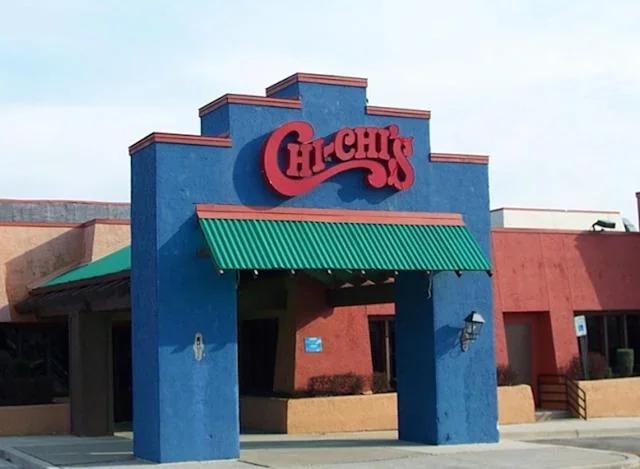
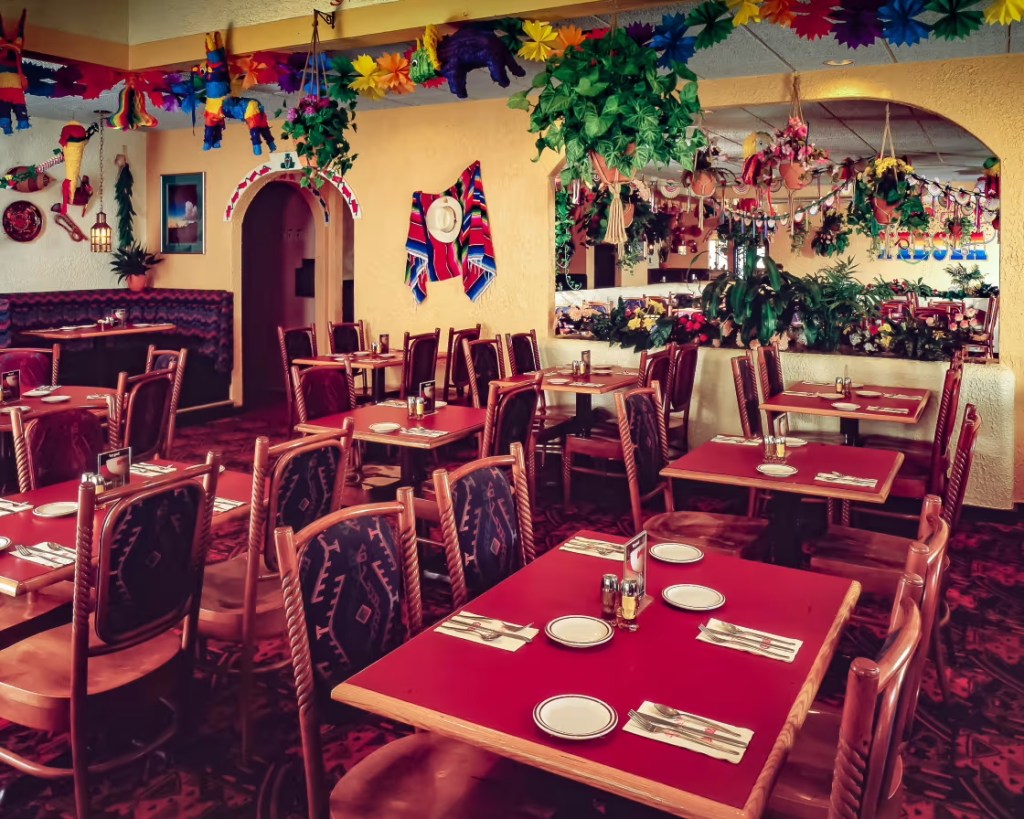
The logo was iconic, the food—home of the chimichanga, enchiladas, tacos, queso and decadent fried ice cream—weighty but luxuriously delicious. The walls, a tan and inviting adobe, were decorated with vibrantly colored tapestries and textiles. Greenery was plentiful, adding a natural fabric to the ambiance, as both hanging pots and built-in planters were plentiful, including in the restaurant’s separate bar. Arched interior windows and doorways, meanwhile, provided broad views of the chain’s rich red tabletops and deep brown, carved wooden chairs and burgundy-patterned short-pile carpet.
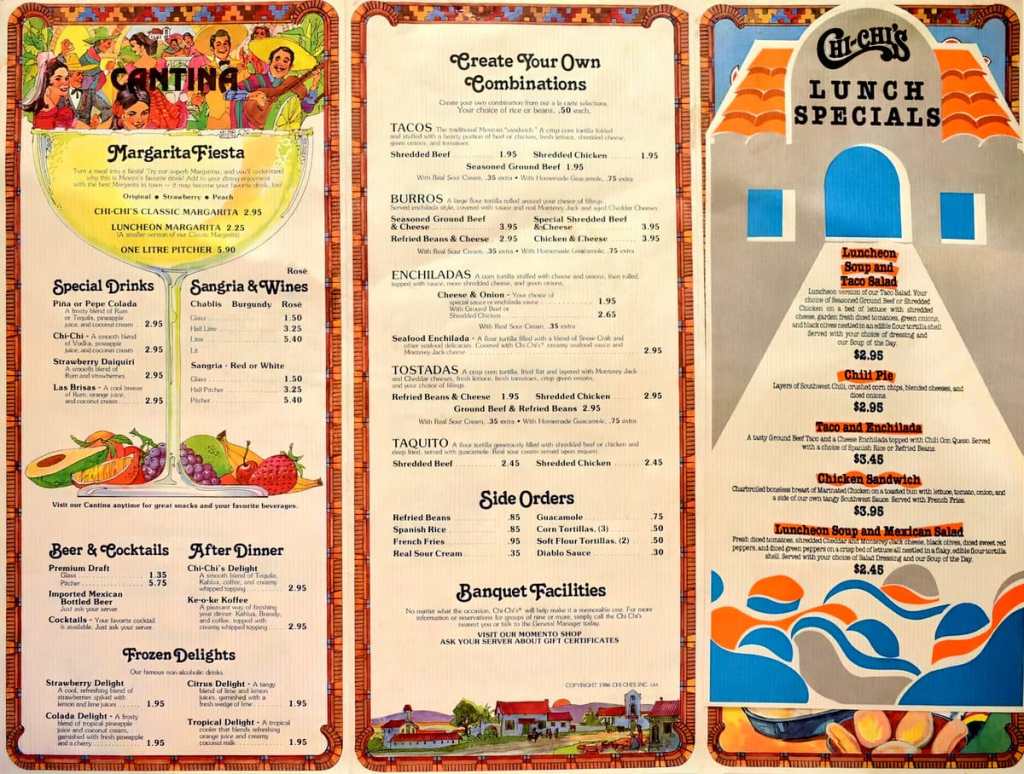
If you’re of a certain age, you might even remember the hostesses’ long-flowing, graceful gowns. Mimicking traditional embroidered huipil, the festive Chi-Chi’s Restaurant hostess uniform bore the Mexican flag’s tricolor green, yellow and red striping topped by a crisp and thick horizontal white band.
Founded in 1976 and named for co-founder Marno McDermott’s wife, Chi Chi, what became the Louisville, Ky.-based chain ultimately grew to 210 locations before being reduced to a single restaurant reportedly in Austria, of all places. But never fear; two new Chi-Chi’s Restaurants are to open this year in Minnesota, the same state in which the first Chi-Chi’s was located.
Why do I care? I love Mexican cuisine. It’s likely my favorite. And, Chi-Chi’s was my first real job.
Thanks in part to a friend’s mother who worked as an accountant at the chain’s headquarters, a modern office building boasting a lot of concrete and glass that bordered our subdivision, I won a spot launching a new site. Applicants needed to apply in person at Bashford Manor Mall while the restaurant was being finished. I remember the line extending down the concourse. People wanted to work there. I was thrilled to get hired, especially with the corporate launch team convincing all of us who worked the grand opening we were part of something special. Certainly, it felt that way when customers flocked to the new eatery, positive vibes flowed freely and waits ran long for weeks. Later I’d work as a waiter at the chain’s Shelbyville Road location in Louisville’s East End and my parents would celebrate my graduating high school at, where else, Chi-Chi’s. Indeed, my gifts included a blue Smith Corona 2200 typewriter, a chimichanga dinner and fried ice cream. But my first W-2 role, of what would become 16 such posts over the next 40 years, was bussing tables.
If memory serves, the starting busboy pay was two dollars-and-change an hour, plus tips. The work itself required true labor. Bussing tables during a rush is one thing. Providing chips and salsa, refilling drinks, running plates to tables and replenishing workstation supplies is another. Those who’ve worked weekends in a restaurant understand what it is to be “in the weeds,” the phrase Chi-Chi’s servers taught me that quickly communicates one is overwhelmed. And good waiters remembered your going above and beyond—running food to tables, sweeping a toddler’s mess from a booth or beneath a four- or six-top once the clueless parents cleared out and refilling a half-dozen drinks and tracking down a fresh cup of decaf for another diner—by typically stuffing a five or ten in your pocket toward the end of a shift. These rewards were in addition to the cash waiters and waitresses regularly provided the bartender and hostesses each day. A busy restaurant boasts its own micro-economy.
Bussing tables might seem straightforward. Just grab a plastic tub and place dirty dishes, utensils, glasses, plates and bowls inside and be sure to announce “behind you” whenever passing the backside of another employee on your way to the dishwashing station. But there was more to it. You needed to take care you didn’t break the stems off the margarita glasses and plates often included uneaten food, so effort was needed to avoid such detritus when grabbing plates and emptying their contents, and speed was always a factor, as corporate trainers drilled into our heads the importance of turning tables. While it was easier and tempting to collect four dinner glasses at once with just one hand by placing your fingers inside the lips and squeezing them together, Chi-Chi’s forbid the practice believing it was a bad look, which it was. Customers don’t want to see your fingers inside the glasses from which they drink, but in a pinch you could minimize the time needed to clear a table by cutting such corners.
There were a host of additional responsibilities. Every Chi-Chi’s diner was greeted with chips, salsa and a fresh jug of ice water. Someone has to prepare, clear and set each new table not just with dinnerware, glassware and napkins, but the chips and salsa and those water pitchers, too, which invariably sweated the table complicating cleanup. These tasks were in addition to refilling salt and pepper shakers and sugar caddies. Back of house tasks were plentiful as well and included cutting lemons for drink stations, stocking bureau-sized warmers with fresh tortilla chips, refilling ketchup bottles and cleaning coffee pots. A seasoned waitress once taught me a few tips, though, for when you were in a hurry. Pouring salt into a coffee pot with hot water and swishing the mix rapidly inside the decanter helped speed that chore, while ketchup bottles could pass quick inspection if you just held the bottle tight and gave it a quick but firm shake.
Working in a Mexican restaurant presents some unique challenges, too. The chain’s most popular appetizer, chili con queso, was served in a black bowl placed atop a metal stand itself positioned above a lit candle, a separate consumable needing routine replacement. Subsequently, accommodating a single appetizer required coordinating three separate items, not counting tortilla chips requiring regular replenishment, in addition to needing matches or a lighter.
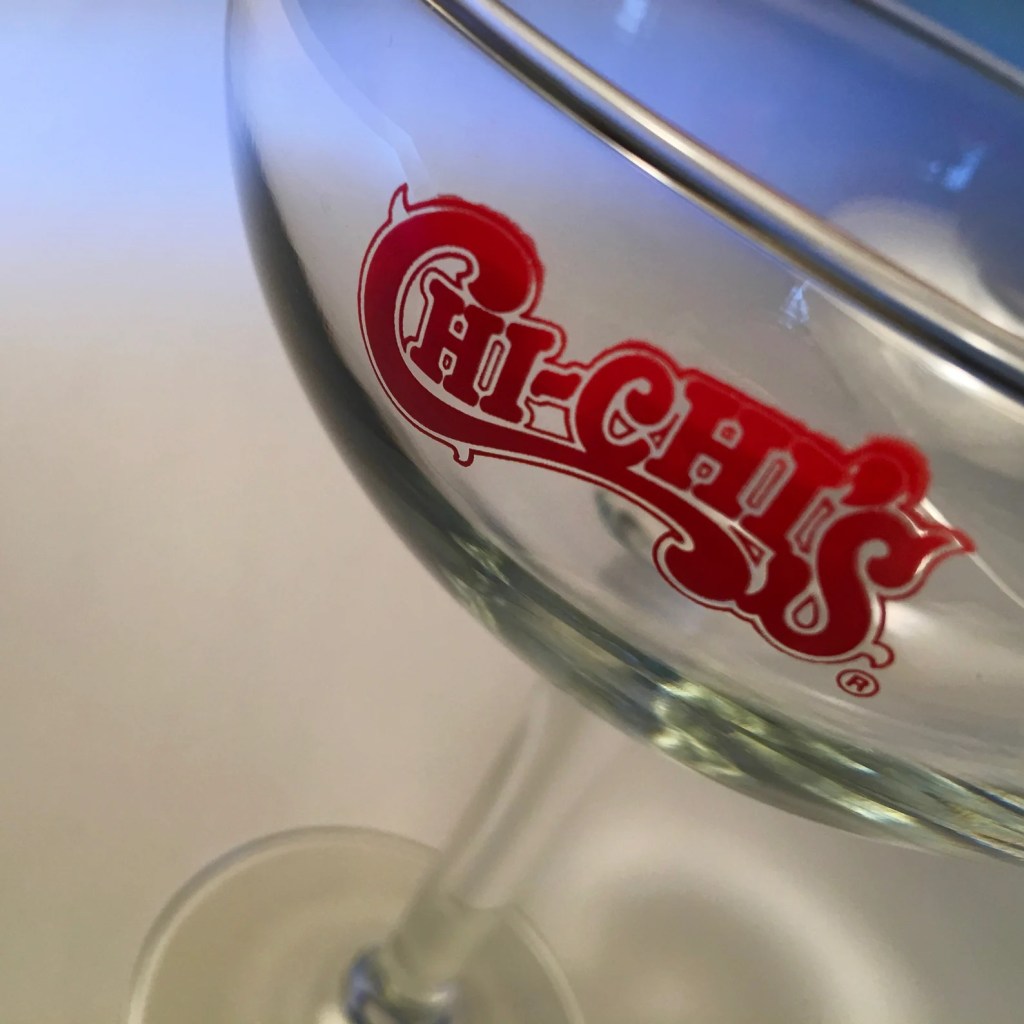
Worse, the chain’s most popular adult beverage was the margarita, the festive tequila drink served in a bowl-shaped glass perched atop a slim stem and compact base. After schlepping just a few ice waters and soft drinks, serving trays inevitably became precariously slippery, which is a dangerous combination when carrying several top-heavy margaritas to a table and having to unload them without upsetting the balance, a lesson I learned the hard way working one weekday lunch when I managed to lose two of the drinks. They just slid down the tray. I watched in horror as they tilted over the edge and crashed to the table below, despite my adjusting the tray’s pitch to try and arrest the beverages’ movement. The table’s ceramic tile shattered the glassware, sending shards and tequila on to the laps and dresses of the two Chi-Chi’s corporate ladies who’d sat at my table. The sincerity of my apologies and efforts to get them fresh water and a new dish towel with which to tidy their clothes generated sympathy and seemingly forgiveness, though, as they tipped generously.
Inevitably, when you were the busiest you’d be all evening managing four tables and running behind refilling drinks while newly seated guests waited to order appetizers and the food for one of your tables was ready in the kitchen, another server would make eye contact and beckon you over with a quick head nod. Why? There was a dreaded birthday at their table, often accompanied by a simple free dessert, that required servers, bussers and even hostesses to gather and sing happy birthday, albeit to the tune of La Cucaracha.
Of course, working several Chi-Chi’s seasons, both as a waiter and busboy, led to many memories. If you ever visited Louisville’s Bashford Manor Mall in the mid 1980s, you may remember the sunken seating areas featuring color TVs. It was there I sat, before beginning a shift on Saturday, April 7, 1984, watching Detroit Tigers starting pitcher Jack Morris throw his only no-hitter. And there was the time the Chi-Chi’s bar was packed with anticipation for the Mike Tyson fight against Marvis Frazier that ended in 30 seconds on July 26, 1986 when Tyson defeated Frazier with a powerful uppercut that also ended the latter’s boxing career. At the time all we knew was disappointment, as the bar, in particular, had been looking forward to an hour or so of an energetic heavyweight tilt in which alcohol, appetizers and gratuities flowed freely.
And just as restaurants boast their own micro-economy, so too do they prove fertile ground for dating. The Chi-Chi’s where I graduated to waiting tables was no exception. I received a firsthand lesson in just how athletic cheerleaders are when I was invited to play tennis with members of the University of Louisville’s squad. These guys and gals were fit and dextrous and didn’t hesitate to blast high-speed serves directly at you and run you ragged across the court. But then they’d turn right around and ask you on a date, which made it all OK in this impressionable college student’s experience. One minute you were in the weeds battling a Friday night rush with these folks, the next you found yourself out on the town with an attractive young woman you might see next in the homecoming king’s court.
Yes, there was something special about Chi-Chi’s restaurants. From the sites and sounds, which included festive mariachi and Mexican folk music, to the inviting scents of fresh-grilled meats and vegetables, it’s hard to find anyone who remembers the chain negatively. I mean, even if you had two margaritas spilled on your work clothes at lunch, a meal at Chi-Chi’s was filling and fun, no?


 Erik Eckel
Leave a comment