
Burger King called it The Whaler. The fried fish sandwich featured wild-caught Alaskan pollock, creamy tartar sauce with a hint of garlic and cool shredded lettuce on a plump sesame seed bun. The offering, of course, competed with McDonald’s Filet-O-Fish, still the best fast-food option available even today. But dinner break at the Oxmoor Mall Foot Locker was only 30 minutes, and this particular winter evening—I’ll never forget it—was chilly and foreboding. And driving somewhere would have taken too long. So I just walked down the concourse to Burger King, the same location where a high-school classmate would soon spot Herb—actually actor Jon Menick—from the chain’s “Where’s Herb” print and TV ads and ultimately win one million dollars. That’s a lot of dough when you’re 19 working for three-thirty-five-an-hour.
Since this was the mid-‘80s, I was working for minimum wage completing five-hour shifts selling Converse, Nike, New Balance and Reebok shoes to the monied classes on Louisville’s wealthy east side. That left me with maybe 13 bucks at the end of the day. The sandwich was but a buck-and-a-quarter. Adding fries and a Pepsi ran the dinner tab to just two dollars.
Rather than eat at one of the restaurant’s stylish turquoise-and-coral colored tables, all of which were empty on this desolate January evening, I returned to Foot Locker. A week into the new year all the holiday decorations were removed and, as anyone who’s worked retail can tell you, the next couple months are always slow. Boring, even. The mall was absent both visitors and activity.
Following habit, I brought the greasy food sack to the shoe store’s ratty office, sat down at the manager’s desk—really a sheet of plywood and several two-by-fours—and spread out the meal. I could relax because the store manager, Joe, a thirty-something married with two kids and living in a ranch a few blocks from the shopping center, was covering the floor.
Socialized at an early age to read while eating, I retrieved the latest copy of Kinney Shoe Corporation’s monthly manager newsletter. These text-only bulletins featured rainbow-colored paper and the common Courier font (they’d likely been typed using an IBM Selectric typewriter) to keep managers apprised of the latest standings regarding regional sales competitions, promotions, store sales, new products and assorted guidance, such as an article on how to sell more spray protectant when selling white shoes. While there were certainly margins in shoe sales, the profit in “fronts,” or t-shirts, sweat suits, jackets and other accessories marketed throughout the front of the store, were much higher. Thus, as a sales associate, selling a pair of shoes was just the beginning of the sales process.
Despite being only an hourly sales person, I always took a strange sense of pride reading our store was leading the region in sales of “fronts,” holiday season revenue and other rankings. While I certainly wasn’t seeking meaning selling basketball, tennis and running shoes, those continued successes made me feel part of something bigger.
Only later would I learn why Joe and his brother, who operated a store in Fort Wayne a few hundred miles north, were typically first and second in various promotions. Whether the monthly contest targeted Air Jordans or Adidas sweatsuits, these guys were always in the top three. I mean, like, always.
Following a K-Swiss or Tretorn contest, in which winning store managers maybe received a fifty or hundred dollar bonus, I noticed the daily sales reports listed numerous refunds for eligible product on the first couple days of the next month. The realization was a little deflating. The brothers were simply cooking the books making fake sales and then processing fake returns to even the inventory.
I shouldn’t have been surprised. One of Joe’s favorite pastimes was playing basketball after-hours in the store. If you remember, ‘80s Foot Lockers featured a partial wood court—the lane if you’re into basketball—and a backboard, hoop and scoreboard where customers checked out. You had to be careful your stray shots didn’t knock merchandise off the waterfall displays or take out a light. That’s one of the reasons Joe kept a Nerf basketball on hand, as the spongy alternative was forgiving.
To hide the evidence from regional managers who would periodically visit the store, including on surprise visits, to perform routine inspections and issue grades for cleanliness, merchandising, sales campaign compliance and the like, the Nerf basketball was always stored deep in a square hole that had been cut in the shelving beneath the cash register to enable electricians to route various cables needed to connect the store’s phone, point-of-sale machine and other gadgets.
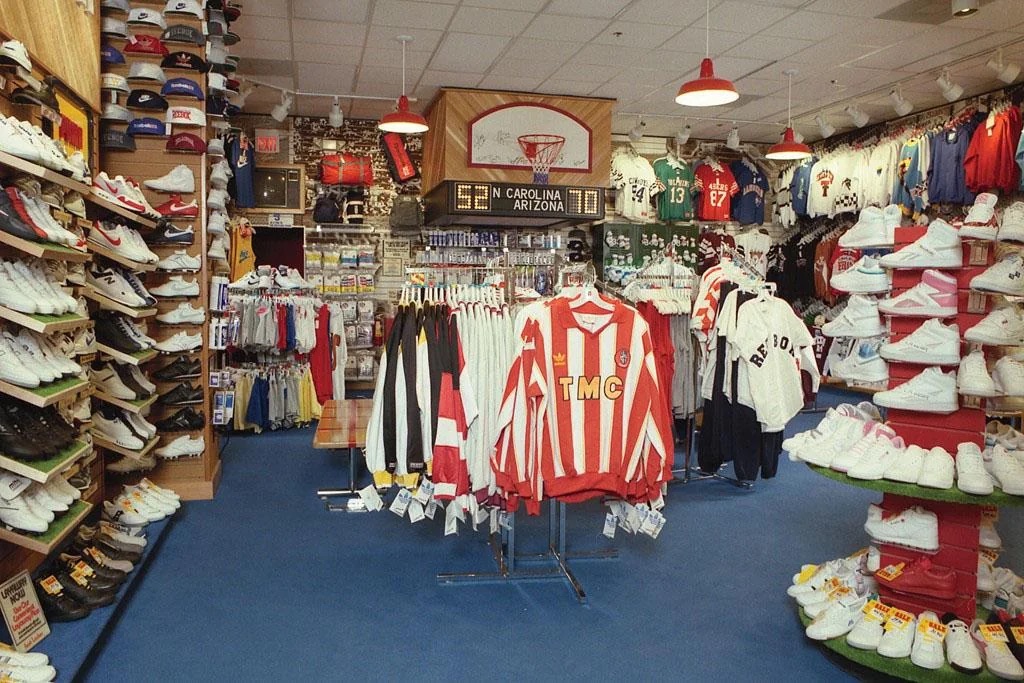
During one particularly important spring inspection, I remember the entire crew being tense waiting for the regional manager to arrive. He ultimately gave the store and crew high marks, making only an insignificant comment about the label for one pack of socks being backward, probably something a customer had done returning the package to the display after checking the price, as we always ensured labels were front and center. Preparing to leave, admiring the store’s organization while standing on the hardwood court in front of the register, the regional rep turned to Joe and me and said, “Great work and, did we know, some managers actually tempted lawsuits and unnecessary injury playing basketball within the store? Who’d be that stupid, really? Clearly we had our act together, keep it up.” Of course, we held our laughter until he left.
Upon finishing the Burger King dinner, which is everything you’re probably thinking it was, I tossed the packaging in the trash, placed the manager report back in its folder and headed, after checking to ensure my official Foot Locker uniform of black pants and festive telltale black-and-white-striped referee polo was free of crumbs, to the front of the store. As soon as I stepped around the doorway I could see all the way to the front where Joe was busy with a handful of customers. He was returning a Chuck Taylor All Star to the merchandise table when I realized who he was talking to. There, in the flesh, were pop star Bruce Springsteen, singer Patti Scialfa and drummer Max Weinberg, a decent portion of the E Street Band. Guitarist Nils Lofgren may have been with them, too, I don’t remember. I don’t recall Clarence Clemons being present, either, though it’s possible and I would have loved meeting the man behind the two-minute-plus Jungleland tenor saxophone solo.
I suspect I’d remember everybody in the entourage had I actually met them. Unfortunately, as I approached, they finished talking with Joe and began walking away. A timid teenager, I didn’t have the cajones to shout or run up to them. You could just tell from their body language they were happy to be in public without a fuss, this after appearing on magazine covers, in newspapers, on TV shows and virtually everywhere else celebrities are celebrated.
You have to understand this was the mid-1980s, right after the Boss released his seventh studio album, Born In The U.S.A.. He was in town to play a concert the next evening at Freedom Hall. The album propelled him to a height similar to that earned by Taylor Swift today. In fact, he retains popularity, 40 years later, as some seven lost albums spanning tunes across 35 years are due for release in June amid fanfare and he’s still widely considered one of the best live entertainers, despite having turned 75.

The LP, with its iconic cover of the Boss’ ass in blue jeans with a red ball cap tucked into a back pocket, the image itself backed by the unmistakable red-and-white stripes of the American flag, spawned seven synthesizer-heavy hit singles, five music videos (one featuring the then-unknown Courtney Cox) and three dance mixes, a far stretch from the grittier rock for which Springsteen was previously known. This was the record that propelled him to worldwide success. The album sold more than 30 million copies and remains a popular patriotic anthem among the ignorant that don’t realize the title track is actually a savage and withering critique of failed American policies.
That didn’t stop the ladies working various stores from abandoning stations and chasing after Bruce and his mates, screaming the entire way. The situation quickly became so chaotic the musicians had to flee through Disc Records’ back door while security guards tried to cover the jewelry and diamond stores staff had abandoned and left unattended.
Should I blame Burger King for costing me friendship with Bruce Springsteen? Is it the fast-food chain’s fault I wasn’t there when Herb showed up? I could have used that million dollars.
No, I take responsibility for my actions. It’s my own bad timing that’s to blame. And I’m proud I let the man and his companions go their own way with no fuss. Besides, I’m smart enough to appreciate the messages in the Boss’ music instead of forcing the songs to match my own agenda. I can live with that.


 Erik Eckel
Leave a comment