
In the late 1970s, Friday evening television broadcasts were a thing. The Dukes of Hazzard, Dallas, The Rockford Files, Wonder Woman andThe Facts of Life all played in prime time. Saturdays also featured intriguing shows, among them Eight Is Enough, The Love Boat and Fantasy Island, as well as B.J. and the Bear. While neither reviewers nor history typically hold these programs in high critical regard, that doesn’t change the fact the corresponding characters, themes and storylines captured something special and earned their way into the popular zeitgeist. They also impacted the way I, and I suspect others, understood and interpreted the world.
While not necessarily profound, the shows’ continual messages were consistent. Establish sound values, then adhere to them. Do the right thing, even when doing so proves difficult. Otherwise, you end up the villain, always rightfully chastised and ultimately a loser in the end. Special holiday-themed episodes only further emphasized these simple truths.
Growing up, holiday shows were a big part of the season, as were large family gatherings with their own frenetic routines. But spring and summer were particularly relaxed seasons. With an older brother and parents frequently engaged in their own weekend activities, I often found myself home alone. That was fine by me. I’d camp out in the family room ensconced within a scratchy gold ‘70s armchair alongside a 19-inch brown faux-wood Zenith and immerse myself within the weekend’s programming.
The Duke boys were heroes. They continually battled to free themselves from unjust charges perpetrated by corrupt local politicians. B.J. McKay, meanwhile, was a lone wolf who worked independently honoring his own ethics, albeit improbably accompanied by a chimpanzee. The rich oil-endowed millionaires on Dallas, meanwhile, confirmed all I held to be true about the monied classes: they were shallow, undeserving, corrupt, greedy and largely and unjustly above the law.
How the Dukes ripping around the fictitious Hazzard County in an obnoxious orange 1969 Dodge Charger named the General Lee and sporting a confederate flag on its roof and a customized horn that sounded the first few notes of Dixie didn’t prove offensive, even then, I’m not sure. But somehow it seemed OK. It wasn’t and isn’t.
Regardless, a few years after the show ran its course I’d have a beer with Tom Wopat—Luke Duke—at a bar called Blinker’s in Louisville. Also of Czech descent, he certainly came across as friendly and welcoming, although he did share the story of the only time he was ever supposedly scared filming the Dukes. If I remember correctly, a scene required filming himself and John Schneider—Bo Duke—in a hectic shot in which Catherine Bach—Daisy Duke—piloted the Charger through one if its stunts. What made the moment memorable isn’t that the reflection was potentially sexist so much as the emotions and experiences he described throughout the evening seemed forthright and unguarded. In that free environment in which he appeared at ease and genuine, having a beer, he said nothing racist or offensive in the slightest. Of course, that’s unlikely proof of anything. Later Wopat would reportedly be arrested and plead guilty to two counts of annoying and accosting a person of the opposite sex.
Maybe I was a naïve kid.
A child of the ‘70s, I lacked only the infamous junk food that rose to infamous prominence during the era. My mother and grandmother preferred Dietrich’s, a health food store in downtown Toledo where they’d always treat me to carrot juice, carob-covered raisins and naturally made peanut butter. What I really wanted, though, were corn syrup-enriched sodas, sugary sweet Pop-Tart pastries and Goober Grape PB&J Stripes that ingeniously featured both Smucker’s grape jelly and processed peanut butter mixed tantalizingly within the same blessed vessel. What a concept.
On many of those evenings home alone, I particularly recall a spring-like Friday night when I snuck my mom’s blue bicycle out of the garage. The 26-inch three-speed model was likely either a Schwinn or Huffy and featured wide handlebars, not the racy drop-type typical of 10-speeds at the time. My mother, intrinsically understanding I was developing more slowly than my peers while also possessing an attention deficit paired with a thrill-seeking predisposition, was particularly safety conscious and simply forbade me from riding the family’s blue Garelli moped ever or any bicycle at night. It wasn’t safe, she insisted. This despite many of the household’s bikes possessing those old-school lights featuring a rolling camber that would contact the rubber tire and generate electricity, and subsequently illumination, while you pedaled.
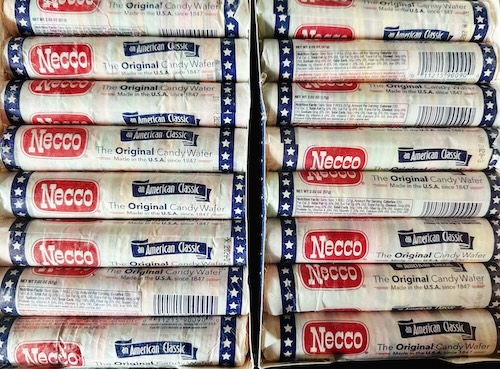
The activity’s forbidden nature made it that much more delicious, especially considering the confections I’d purchase after cycling several blocks to the local Kazmaier’s 5-Star Grocery, which still services the small town’s shoppers from the same location some 50 years later. Necco Wafers, Strawberry-Frosted Pop-Tarts and similar processed foods and candies were all tasty and delectable treats well within my lawn-mowing endowed budget. I’d always select a couple Faygo soft drinks, too, forever popular in Michigan and northwestern Ohio.
The Faygo packaging was unique. The specially shaped 16-ounce bottles were wrapped within a polystyrene sleeve to retain chill when refrigerated and boasted premium additional “pop”—a word, incidentally, Faygo (they initially wanted to name their business the Feigenson Brothers Company, but the name was too long to reasonably fit a label) claims it originated. Regardless of pop’s etymology, there was no denying the brand’s more common, dare I say pedestrian, competitors typically produced just 12-ounce carry-out options. Although Vernor’s was another regional favorite that remains prized by many to this day, the spicy soda often mistaken for ginger ale had already become my winter-weather and holiday preference.
Thus, Faygo was a perfect spring and summer selection and proved unique from the start. The Russian brothers who’d founded the Detroit-based beverage company chose their pop varieties based on the many cake icing flavors they’d previously developed as bakers. You wouldn’t find such bland Faygo choices as orange or cola, no. Instead, you were treated to bright, colorful labels declaring such playful names as Moonshine, Mango Tango, Moon Mist, Rock & Rye, Jazzin’ Blues Berry and Vanilla Creme Soda. Nevertheless, they still also offered traditional flavors, such as Red Pop, Black Cherry and Dr. Faygo, too.
Fortunately, my mother’s bike also featured a prominent white handlebar basket which, if memory serves, also fashionably sported a few plastic yellow daisies. I couldn’t have cared less. The basket held these prohibited treasures, freeing both hands to navigate, brake and shift as I rode home along the dark tree-covered streets of my hometown.
Today the Meijer grocery chain stocks Faygo product. While too sweet for my adult palate, I occasionally pour a Rock & Rye or Red Pop for old times’ sake. I’m sure to use plenty of ice and let the drink dilute a little, before imbibing, but in the best interests of my dietary health, I now typically forego the Necco and Pop-Tarts accompaniments that used to add a little something special and decadent to my teenage Friday nights. And, you can still catch many of those television program reruns on Pluto TV and other channels that regularly surface ads for supplementary Medicaid insurance, rheumatoid arthritis pharmaceuticals and reverse mortgages. Yes, they know their audience.


 Erik Eckel
Leave a comment